The Florida Leak Detection Guide
How Do Pros Find A Hidden Leak In A Florida Home?
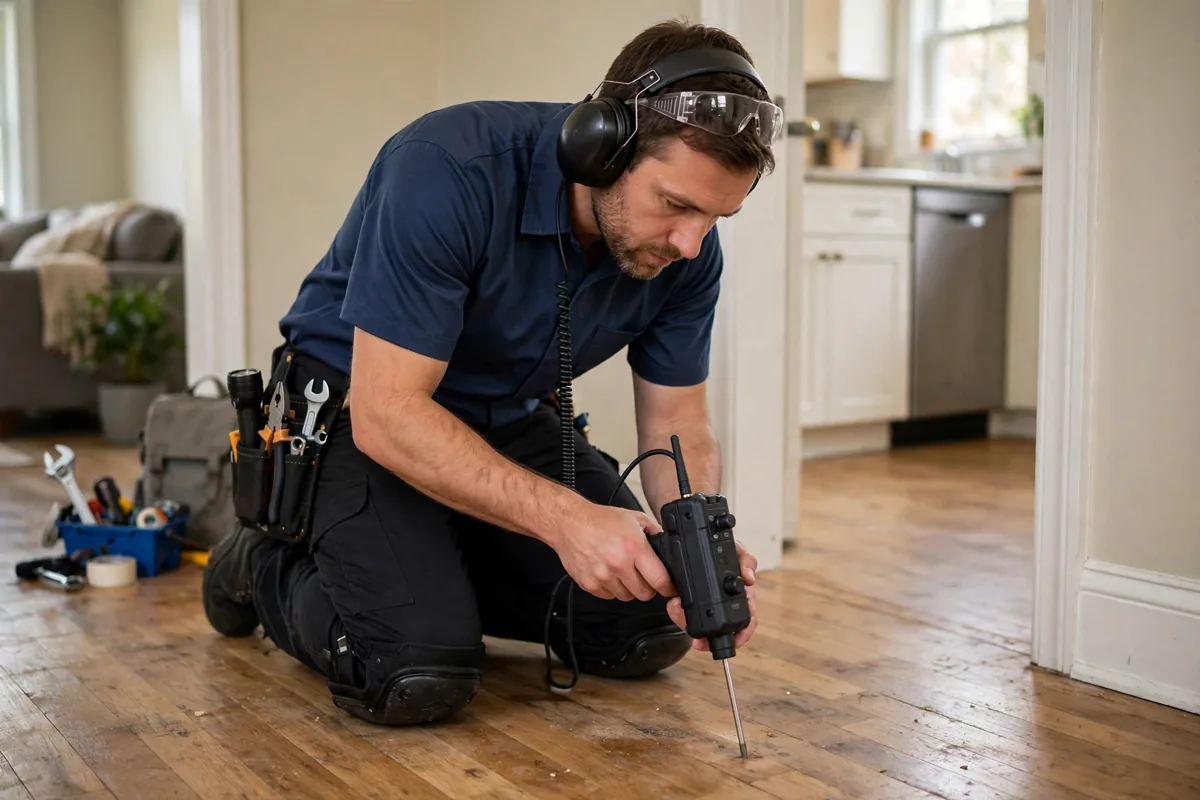
A professional visit follows a set order: confirm, isolate, pinpoint, document. The pro first confirms water is really escaping — usually with the water meter — then isolates sections of the system so whole branches are cleared or confirmed one by one. Only then do the listening and imaging tools come out, because they work best on a narrowed search area. In Florida that order matters even more, because a high water table and year-round humidity can make a healthy home look damp. The visit ends with a marked location and a written record you can hand to any repair crew or insurer.
What Happens First: The Meter And Pressure Tests?
The water meter test is simple and decisive: with everything off, movement means loss. Pressure testing then raises or holds pressure in one section at a time — hot side, cold side, irrigation, pool — using a gauge to watch for decay. A section that cannot hold pressure holds the leak. This isolation step is what keeps the search honest: instead of scanning a whole house, the pro tests a map of the system piece by piece. The same visit usually maps damp with a moisture meter, so the report shows both the source and the spread — and every homeowner should know where the main shut-off valve is before they ever need it.
How Do Acoustic And Thermal Tools Pinpoint The Spot?
Water escaping a pressurized line makes a distinct sound that travels through pipe and soil. A ground microphone and acoustic listening equipment let the pro follow that sound to its loudest point. A thermal imaging camera (FLIR) shows the warm path of a hot-water line under flooring, often revealing exactly where it spreads. In a Florida pool system, dye testing around fittings and lights separates a plumbing leak from simple evaporation. Each tool answers a different question, so the pro combines them until the marked spot is proven, not guessed.
The wettest spot is often not the source — water travels along pipes, beams and soil before it shows.

Why Do Florida Pipes Leak?
Florida's housing is newer than the other states we serve — a median year built of 1988, with 34.0% of homes built before 1980 (U.S. Census Bureau, ACS 2024) — but its climate works on pipes every day of the year. Understanding the likely failure in your home's setting tells the pro where to start listening.
What Happens To Copper And Plastic Lines As They Age?
Copper develops pinhole leaks where water chemistry is aggressive, and coastal salt corrosion thins metal fittings and valves near the shore. Plastic lines resist corrosion but can split at fittings or where shifting soil flexes a rigid run. With about a third of Florida homes now carrying plumbing that is more than four decades old, aging joints, worn valves and tired water heaters are everyday suspects. Water chemistry ties many failures together: hard water leaves mineral scale inside lines, acidic water can eat into metal, and soil corrosion attacks buried pipe from the outside.
How Do Water And Soil Stress Underground Lines?
Much of Florida sits on a high water table, so buried lines spend their lives in wet ground. Escaping water drains into sandy soil instead of pooling, which hides leaks longer, and any excavation can fill with groundwater before the pipe is even reached. Where clay pockets occur, expansive clay soil swells in the wet season and shrinks in dry spells, bending rigid lines at joints. Shifting soil and foundation movement stress lines under the concrete slab in the same slow way, season after season, until a weakened section finally opens. Heavy rain adds one more mask: a wet yard after a storm looks normal, even when a line underneath is leaking.
Tip: Note the meter reading before you call. One reading, taken with everything off, tells the pro more than ten minutes of description.
Want A Pro To Run These Tests At Your Home?
One free call connects you with a local pro who can typically arrive in 30–60 minutes.
📞 Call Free — (800) 555-0100What Should A Florida Homeowner Do With The Report?
The detection report is the bridge between finding the leak and fixing it well. It records the leak's location, the tests used, photos or thermal images, and moisture readings. Repair pros quote more accurately from a report than from a description, and insurers use the same documentation to judge a claim. Keep it with your home records — if a second leak ever appears, the map of your lines in the first report speeds up the second search. The options usually mean a spot repair through the smallest practical opening, rerouting a line around the failed run so the old section can be abandoned in place, or repiping the affected section when the pipe is failing in more than one place — and the pro prices each one before you choose. The same report also supports a water-bill adjustment request to your city water utility after a repaired leak, because it proves when the leak was found and how much water the meter recorded. Seasonal prevention checks help too: freeze preparation before the rare northern cold snap and a spring irrigation check when systems restart catch small failures early. NOAA station data put Florida's freeze-day mean at just 7.5 days a year, so freeze damage is uncommon — but a single hard night can still split an exposed line, and the leak shows only when the pipe thaws.
Which Pipe Materials Fill Florida Homes?
A Florida pro reads the home's era in its pipes. A copper pipe system from the 1970s and 1980s can open a pinhole leak near the coast; a galvanized steel pipe from earlier decades corrodes inward until a joint weeps; cast iron pipe carries drains in older homes and cracks as it ages. Newer construction and remodels use PEX pipe and CPVC pipe, which resist corrosion but can still fail at fittings, some 1990s and 2000s homes carry the Kitec plumbing system whose brass fittings are known for failing as they age, and a water heater at the end of its life is its own leak source. Pipe corrosion, hard water scale inside lines, soil movement under slabs and the occasional freeze burst in the northern counties complete the state's usual suspect list — the pro tests in that order.
Why Does The Material Change The Search?
Each material carries sound and heat differently, so the same acoustic listening approach is tuned differently for copper than for plastic. Thermal imaging reads a hot line under a floor clearly regardless of material, while tracer gas helps most on long or complex runs. Knowing the material narrows the settings, the search pattern and the likely failure points before the first test begins. Pipe materials and how each fails also shape the repair conversation, because a failed run in one material often argues for rerouting in another. Three state bodies matter in this work: the Florida Department of Business and Professional Regulation (DBPR) handles licensing for plumbing contractors, the Florida Department of Environmental Protection (FDEP) oversees drinking water quality, and the Florida Department of Agriculture and Consumer Services (FDACS) takes consumer complaints. Licensing and permits questions are settled with the state licensing boards and your local building department before anyone is hired, not after — local permits for repair work vary by city and by the scope of the job.